


If you have problems with your nail plate, it is important to know which doctor treats toenail fungus to see a specialist without waiting for complications.It is difficult for a person facing a fungal infection for the first time to understand the name of this specialist.Dermatologists and mycologists deal with the problem of fungal diseases, so visiting a therapist is not recommended.
What is nail fungus?
Diseases caused by parasitic microorganisms are called pathogenic fungi.This disease affects the integument of the horn (nail) and the skin of the leg around it, develops quickly, brings discomfort and discomfort.Living in the body, dangerous parasites poison it with toxins and can worsen the general condition.You can get infected by wearing other people's shoes, not keeping your feet clean, or walking barefoot on the beach or in the pool.People who suffer from such problems need to know which doctor treats nail fungus to avoid complications and receive appropriate treatment to eliminate the unpleasant disease.
Disease symptoms
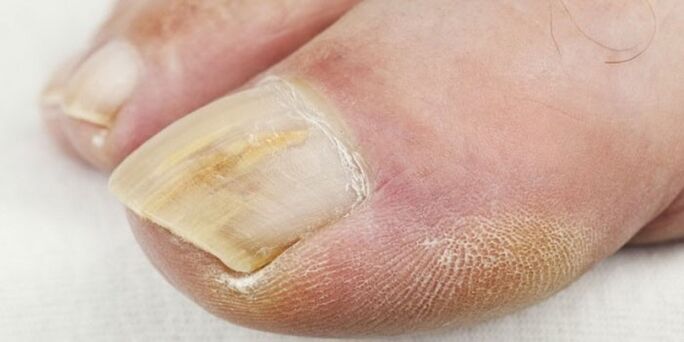
Which doctor treats the symptoms of toenail fungus depends on how badly the plate affected by the fungus is destroyed and what the nature of the lesion is.The following characteristic signs for the appearance of the fungus are distinguished:
- normotrophic type: stripes, spots on the side of the nail are ocher or white, ease of separation of the plate from the skin, a person experiences itching on the skin under a healthy nail;
- hypertrophic: plate thickening, loss of luster, collapse, dullness, severe deformation, dark yellow or gray color;
- atrophic: brown-gray color, loss of luster, pallor, necrosis and destruction of the toenail base;
- lateral and distal: loss of color, transverse yellowish furrows, collapse, roughness, exposed nail bed of the toes, swelling, redness, thickening, pain in the skin of the feet, advanced cases may be characterized by the appearance of pus;
- proximal: bleaching, destruction;
- total: complete destruction of toenails due to lack of therapy;
- white superficial: white spots, collapse, delamination, pain.
Which doctor treats nail fungus?
Knowing the doctor who deals with nails is useful for every patient suffering from toenail fungus.In this case, the therapist will not help;you need to visit a specialist.This doctor is a dermatologist, he advises in the early stages of the disease.In advanced cases, a consultation with a mycologist is required - this is a specialist who treats nail fungus in a very targeted way.
Dermatologist
This doctor can prescribe the right treatment and eliminate nail fungus.His qualifications allow him to eliminate skin problems, including viral and infectious lesions, dermatitis, eczema and parasitic diseases.The latter includes fungal infections.If the case is not extended, you should contact a dermatologist at a local clinic or dermatovenerology dispensary and register for the first examination.According to the indications, he can refer the patient to a mycologist.
Mycologist
In difficult cases, the answer to the question of a doctor who treats toenails is to contact a mycologist.This is the name of the same dermatologist who treats only fungal infections of the skin, hair and nail plates.It is not available in every clinic nor in the city.Consultation with a mycologist includes the treatment and prevention of fungal diseases: onychomycosis, candidiasis, microsporia, trichophytosis, epidermophytosis, foot mycosis.You should contact them after a referral from a dermatologist.

How did the appointment go?
Once you know which doctor treats toenail fungus, don't hesitate to make an appointment.During the first visit, the nail specialist interviews the patient about how long the problem has been present, the sensations experienced, and the patient's lifestyle.After collecting information, a preliminary examination of the affected leg area is conducted, a diagnosis is made, and the level of infection is determined.
External signs may not always indicate the species of fungus, so scrapings of dead scales are taken for examination in the laboratory.The resulting medicinal material is examined under a microscope and plated on nutrient media.You need to see a doctor as early as possible to cure the fungus without consequences for the patient and his body.
Repeated negotiations
After receiving the test from the laboratory, a second consultation is conducted.A mycologist or dermatologist reports the cause of the growth, the presence of fungus, its type and prescribes the correct treatment.The drug is selected depending on the individual characteristics of the patient.The treatment procedure for this disease is long, so you need to visit the specialist several more times to monitor the therapy and prevent infection of the patient's body.
Treatment Options
After studying the etiology of the fungus that has affected the nail plate on the toe, treatment is prescribed.It is not recommended to self-medicate because there is a risk of side effects.Main antifungal drugs and treatment methods used:
- oral – tablets, capsules for a comprehensive effect on parasites from the inside;
- local effects - applied externally, this includes ointments, creams, compresses, drops, varnishes;
- special laser treatment - improves the penetration of the agent in the tissue and microcirculation;
- a recommendation for nail removal surgery is given in extreme cases when recovery is impossible.

Popular effective drugs, divided into groups according to their effect on fungal pathogens, are:
- Antifungal varnish.
- Preparations for removing plates (sometimes needed to cure fungus).
- Antifungal tablets.
- Cream, ointment, spray.
- Other medicines: medicinal liquid, tea tree oil and others.